
Environmental Studies

An Environmental Studies major or minor teaches you to analyze complex environmental issues from a variety of disciplinary perspectives, including natural sciences, social sciences, and humanities.
Through fieldwork, study trips, and in-depth research projects, students who major and minor in environmental studies at Gettysburg College will engage in high-impact learning that leads them from the field to the laboratory on their path to real-world discoveries.
Majors & Minors
| Program Name | Program Type |
|---|---|
Environmental Studies |
Major Bachelor of Arts |
Environmental Science |
Major Bachelor of Science |
Environmental Studies |
Minor |
Why choose Environmental Studies?
In the classroom or laboratory, at an internship or on a service-learning project, in the comfort of the library or under demanding field conditions, you’ll learn to approach environmental issues with an open mind, examine alternatives carefully, and write and speak effectively.
You’ll finish the program prepared for graduate study or careers in environmental science, management, and communication, law, public policy, environmental humanities, urban planning, geographic information systems (GIS), the nonprofit sector, and other fields.
Why choose Environmental Studies at Gettysburg
Opportunities
At Gettysburg College, sustainability isn't limited to the ES Department. It's a campus-wide commitment. The College is a charter signatory of the American College and University Presidents Climate Commitment, and has made major investments in energy efficiency.

Academics
You’ll gain field experience in locations such as:
- Mines in coal country and agricultural farms in Pennsylvania
- Forests of the world-famous Gettysburg National Military Park and the Appalachian Mountains
- Beaches of North Carolina’s Outer Banks
- Decision-making centers of Washington D.C.
- Headquarters of national news agencies
- Renowned film festivals
- Summer offers you a departmental field course on the Rocky Mountain West, as well as regional, national, and international internships and research opportunities.

Community of Experts and Professors
Each of our faculty actively involves students in their research–an essential part of the most comprehensive environmental program among nationally ranked liberal arts colleges.

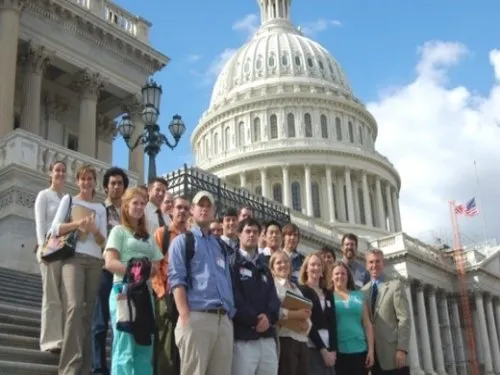
ES Majors analyze complex environmental issues from the classroom, the laboratory, and most importantly… the field!
From the US Capital in DC to the NASA Goddard Space Flight Center to the shores Assateague Island to the forests of the Appalachian Mountains, ES majors are there.
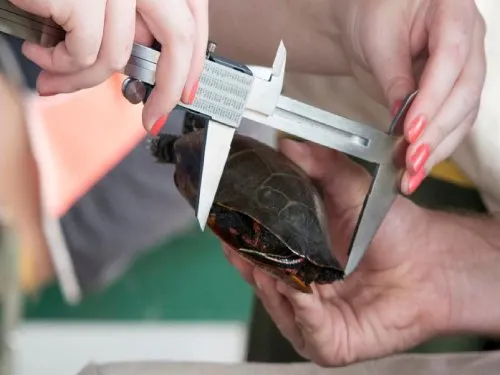
Planning your future
- ES opportunities blog (jobs, internships, and opportunities posted by ES faculty).
- Planning for future success: a guide for ES Majors and Minors
- GIS career advice for ES majors
- Internships
- Sample resume (PDF)
Additional Resources
- APA Citation Guides: University of Alberta (quick guide) and Purdue OWL (comprehensive guide).
- Apply for ES department sponsorship of an event (DOC)
Featured Courses
Visit Curriculum tab for a comprehensive list of all available courses
100 Level
Welcome to Our Oceans Through Data! We live on an “ocean planet” and the ocean plays a central role in all aspects of our life–from the oxygen we breath to the global transportation of goods. Yet, in many ways, the ocean remains a mystery to us. We have, for example, mapped the Moon, Venus, and Mars at a higher resolution than much of the ocean floor. In this class, we will use real-world data to explore the ocean’s complex chemical, geological, biological, and physical processes and how these processes shape our daily lives. These data will come from satellites orbiting our planet, from robots roaming the deep ocean, and from citizen scientists reporting on local ocean conditions. Understanding our ocean is incredibly timely, as it is both heavily impacted by and key to mitigating global crises like food scarcity and climate change.
200 Level
Intensive two-week field-based examination of the physical and cultural geography of the Rocky Mountain West. Focusing on the San Juan Mountain Range in Southwest Colorado, students participate in field-based projects to examine major environmental and natural resource management issues from diverse multi-cultural, institutional, and political-economic perspectives. Stops include Boulder, Durango, Telluride, Cortez, Ouray and Silverton, Colorado. Students will visit Mesa Verde National Park, the Ute Mountain Ute Reservation, the San Juan National Forest, the Weminuche Wilderness, and historic mining towns. Student will gain a critical place-based understanding of recent efforts to achieve sustainable and socially-just solutions to resource management problems. *Please note that dates differ from the online courses and enrollment requires permission of the instructor, Prof. Randall Wilson (rwilson@gettysburg.edu).
300 Level
Application of geographic information systems and spatial analytic methods to selected environmental problems. Students will solidify their existing GIS skills, as well as learn new analytic strategies such as exploratory spatial data analysis, quantitative landscape analysis, and spatial interpolation. Lab exercises focus on environmental applications such as constructing habitat suitability models, quantifying habitat fragmentation, mapping wilderness, and identifying environmental health "hot spots". Each student will also complete a final project related to an environmental issue, where they will define project needs, develop a GIS database, conduct spatial analyses, and present results. Prerequisite: Environmental Studies 230. Alternate Years.
connectGettysburg and more resources
All Gettysburg students have access to the Gettysburg Network via the connectGettysburg platform, the College’s online engagement, networking, and mentoring platform with endless opportunities at students’ fingertips. More than 33,000 alumni, students, parents, friends of the College, and employees can connect, share career advice and opportunities with students and alumni, and grow their professional networks.
Additionally, Gettysburg College’s environmental studies department maintains a LinkedIn group to further support connections and dialogue surrounding environmental studies.
Student life opportunities
As a charter signatory of the American College and University Presidents’ Climate Commitment (ACUPCC), Gettysburg’s environmental studies department partners with an array of co-curricular opportunities to focus on the environment and our place in it:
- The Gettysburg Environmental Concerns Organization (G.E.C.O.)
- The Farmhouse, a residence shared by students committed to social justice and sustainability
- Campus Kitchens, a student-initiated program to reduce food waste
- The Painted Turtle Farm, administered by the Center for Public Service as a community outreach program
- Diversity, Inclusion, Equity, and Belonging (DIEB) Student Advisory Board
- Student Senate, Sustainability Committee
- Eisenhower Institute Environmental Leadership program


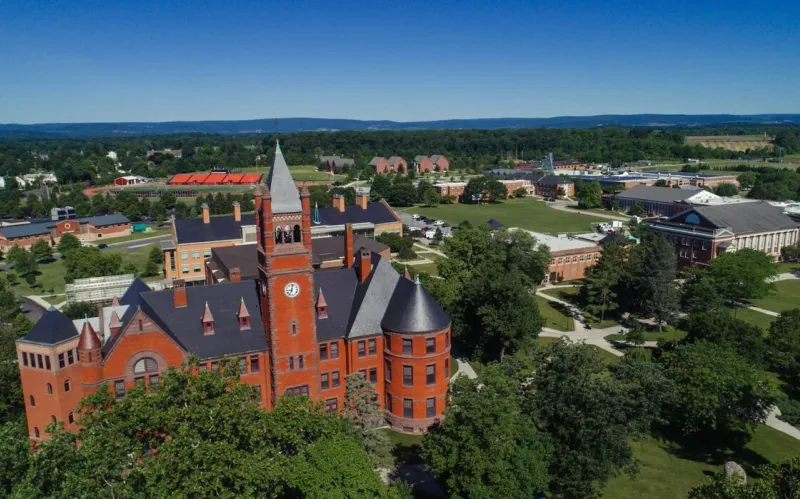

Students pursuing environmental studies at Gettysburg College can build on their critical thinking and analytical skills gained through their coursework on campus and in professional environments.
From participating in X-Sig, Kolbe Fellowships, and Digital Humanities Fellowships to engaging in publishable environmental justice, sustainable development, natural sciences, and public lands policy research, students can explore various curricular research passions. These enriching experiences prepare students to confront society’s most pressing questions across multiple disciplines.
Major and Minor Information
Eleven courses are required for the ES, BA.
Six Environmental Studies Core Courses
- ES 196 Environmental Science and Society
- ES 211 Principles of Ecology
- ES 223 Earth System Science
- ES 225 Environmental Humanities
- ES 230 Intro to Geographic Information Systems
- ES 400 Seminar or ES 460
Five ES Elective Courses
- One elective may be 100-level (FYS courses taught by ES faculty, ES 100-level course except ES 121)
- Two electives may be taken off-campus or in another department.
A list of approved electives is available on the Environmental Studies programs webpage. Other electives courses require permission of ES department.
Notes:
- Students must complete an area of concentration through their choice of electives.
Consult the Environmental Studies programs webpage for a list of possible areas of concentration and discuss goals with ES faculty advisor
Fourteen courses are required for the ES, BS.
Six Environmental Science Core Courses
- ES 196 Environmental Science and Society
- ES 211 Principles of Ecology
- ES 223 Earth System Science
- ES 225 Environmental Humanities
- ES 230 Intro to Geographic Information Systems
- ES 400 Seminar or ES 460
Mathematics and Statistics Course
- One from the following: MATH 111, 112, 207 (107 prior to Fall, 2026), BIO 260, ECON 241, HS 232, POL 215, or Psych 205.
Those who have already satisfied the math and Statistics requirement are recommended to take additional math or computer science courses, such as CS 111, Math 211, or MATH 212
Four Science Courses
- A two-course sequence in a single discipline: Biology (BIO 111 & BIO 112), Chemistry (CHEM 107 & 108), Data Science (DS 256 & DS 325), or Physics (choice of PHY 103 & 104, PHY 109 & 110, or PHY 111 & 112 – physics double majors only).
- Two 300 level ES-prefix Lab electives (ES 302, 306, 309, 312, 318, 363), or a second two-course sequence in a different science discipline.
Three ES Elective Courses
- One elective may be 100-level (FYS courses taught by ES faculty, ES 100-level courses except ES121)
- Two electives may be taken off-campus or in another department.
A list of approved electives is available on the Environmental Studies curriculum webpage. Other elective courses require permission of ES department.
Notes:
- Students must complete an area of concentration through their choice of electives.
Consult the Environmental Studies programs webpage for a list of possible areas of concentration and discuss goals with ES faculty advisor. - Link to Environmental Studies programs webpage: https://www.gettysburg.edu/academic-programs/environmental-studies/programs/major-minor
Six ES courses are required for the minor.
Four ES Core Courses
- ES 196 Environmental Science and Society
- ES 211 Principles of Ecology or ES 223 Earth System Science
- ES 225 Environmental Humanities
- ES 230 Intro to Geographic Information Systems
Two ES Elective Courses
- Generally, the ES electives must be taken at the 200 or 300 level.
However, student may petition the ES department to count a 100-level ES or FYS course as an elective if it is the first ES course taken. - With permission of the ES department, one elective may be taken off-campus or in another department.
Notes
- ES 121 Environmental Issues cannot count toward the ES major or minor.
- Limit of one course may be taken with Satisfactory/Unsatisfactory grading option.
First Year Advising and Registration recommendations
The Environmental Studies department offers a BA degree in Environmental Studies and a BS degree in Environmental Science.
Common first-year courses
Required: majors (BA and BS) and minors
- ES 196 Environmental Science and Society: take as early as possible, preferably in the first year
- Note: ES 121 is designed for non-majors and does not count toward the ES majors.
Recommended for Environmental Science BS degree students (two semesters of science in first year)
- BIO 111 Intro Biology for Life Sciences/BIO 112 Form and Function in Living Organisms
OR - CHEM 107 Chemical Structure and Bonding/CHEM 108 Chemical Reactivity
OR - DS 256 Data Science Programming/DS 325 Applied Data Science
OR - Physics:
- PHY 111/112 is recommended only for students planning to double-major in Physics.
- PHY 109/110 (Calculus-based physics; open to SO, JR, and SR students only)
- PHY 103/104 (Elementary Physics; open to SO, JR, and SR students only)
Available Courses
100 Level
Investigation of natural and human induced climate forcings and scientific principles that cause climate change. Topics include volcanoes, greenhouse gases, glaciers, flooding, ocean acidification, and sea level rise. Climate change mitigation, communication, and sustainable practices are discussed.
Introduction to national and global environmental issues. Students learn the basic concepts of ecology, including population growth models, species interactions, and ecosystem and biosphere processes. Building on this scientific base, students use an interdisciplinary approach to analyze economic, ethical, political, and social aspects of environmental issues. Topics include human population dynamics, air and water pollution, toxic wastes, food production, land use, and energy utilization.
Introduction to the methods and assumptions underlying environmental science as applied to current environmental problems and their intersection with modern society. Building from a foundation in the natural sciences, an interdisciplinary approach is used to investigate the social causes and consequences of air and water pollution, human population, food production, energy, natural resource use, toxic waste, endangered species, land conservation, and environmental health.
Examination of past and present environmental challenges facing indigenous communities in the United States with a focus on tribal activism and indigenous voices. Students analyze land and natural resource disputes in the context of European conquest, indigenous traditions, law, and human rights. Course includes in-depth analysis of contemporary environmental conflicts related to climate justice, fossil fuel extraction, and environmental health.
An introduction to geography through the study of world regions. This course serves to broaden and diversify students’ worldviews on contemporary issues while providing powerful conceptual tools for clearer understanding. Geographic applications emphasize the importance of region, place, spatial scale, and diffusion. Course focuses on the interaction within and between regional cultures, environments, politics, and processes of globalization from a variety of scales. Topics include: human-induced environmental change, population and migration, culture change, international development, regional conflict, and global inequality.
Studies of human activities in its locational context. Topics include basic place name geography, population trends and characteristics, health and human development, culture and language, technology and economic development, human ecology, and environmental problems.
Animals in Society, Culture, and Literature. How do we engage with the animals that we encounter in “human” spaces? How do and how should we treat them? These animals might be companions, metaphors, food, tools, characters, objects, friends, or monsters. They are found not only in our homes, on our plates, in the lab, and at the zoo, but in our stories and imaginations. In this course, students consider what it means to be human in relation to nonhuman animals.
Introduction to the physical, chemical, and biological components of the Chesapeake Bay ecosystem. Emphasis is placed on the history of the Bay, primary production dynamics, habitat types, and pelagic and bottom-dwelling organisms. Human impacts on the Bay and its watershed are discussed, including contemporary issues such as crab and oyster fisheries, aquaculture, nutrient inputs, toxic chemicals, exotic species invasions, and the management goals of the Chesapeake Bay Program
Examines the effects of the environment on human health in the United States and globally. Topics include how the body reacts to environmental pollutants in the water, air, and soil; the agents of environmental contamination; hazardous waste; environmental justice and policy decisions; and emerging global environmental health issues.
Welcome to Our Oceans Through Data! We live on an “ocean planet” and the ocean plays a central role in all aspects of our life–from the oxygen we breath to the global transportation of goods. Yet, in many ways, the ocean remains a mystery to us. We have, for example, mapped the Moon, Venus, and Mars at a higher resolution than much of the ocean floor. In this class, we will use real-world data to explore the ocean’s complex chemical, geological, biological, and physical processes and how these processes shape our daily lives. These data will come from satellites orbiting our planet, from robots roaming the deep ocean, and from citizen scientists reporting on local ocean conditions. Understanding our ocean is incredibly timely, as it is both heavily impacted by and key to mitigating global crises like food scarcity and climate change.
Our lives depend on, are enhanced by, and at times even threatened by plants. From the oxygen we breathe to the carbon dioxide we release, our lives (biological, cultural and spiritual) are thoroughly integrated with plants. In this course "Plants, People and the Environment" we examine the biology of plants including the traditional botanical disciplines of anatomy, evolution, ecology, physiology as well as the cultural uses of plants from agriculture to religion. Further, we consider the developing applications of plants in human well-being like pollution remediation, food production and pharmaceuticals.
Study of the localized weather of a region. Influencing factors of climate are examined, including continental vs. oceanic/lake effects, temperature and precipitation, the role of cyclones and anticyclones, and topographic and organismic alterations. Also analyzed are specific climatological disturbances, such as thunderstorm formation, tornado development and occurrence, hurricane structure and movement, El Nino, and the Southern Oscillation (ENSO), and La Nina.
Introduction to the ecology and conservation of large marine animals including marine mammals, sea turtles, sea birds, invertebrates, bony fishes, and sharks. Using marine megafauna examples and case studies, this lecture course integrates fundamental ecological concepts with interdisciplinary discussion of ocean ecosystems, animal physiology and behavior, methodological approaches and technologies, social value and cultural use, and national and international conservation and management.
Exploration of the causes and consequences of the current species extinction crisis. The focus is on why and how the loss of biodiversity is an important environmental threat. Topics will include the importance of biodiversity and healthy ecosystems, the intrinsic and utilitarian values of biodiversity, the social and political issues associated with this issue. Topics will be explored through active engagement in service learning activities and through reading of diverse sources.
200 Level
Introduction to geographic information systems and science, and applications to environmental studies. Topics include GPS and spatial data input, cartography and map projections, data models and database development, spatial analysis, and evaluation of uncertainty. Laboratory exercises use ArcGIS software to provide hands-on experience in the use and analysis of geographic data.
Study of a topic not normally covered in depth in the regular curriculum of Environmental Studies. Topics vary and may include environmental literature, history, philosophy, religion, or art. Offered irregularly.
A discipline comprising pure and applied science, which focuses on the preservation of biological diversity. Focus implicitly recognizes that preserving the genetic and ecological features of a species requires preservation of that species' niche. Topics include food web organization, spatial heterogeneity and disturbance, consequences of small population size and inbreeding, captive propagation, demographics of population growth, and species reintroduction and management. Prerequisite: Environmental Studies 211 or BIO 111. BIO 256 and ES 256 are cross-listed.
Intensive two-week field-based examination of the physical and cultural geography of the Rocky Mountain West. Focusing on the San Juan Mountain Range in Southwest Colorado, students participate in field-based projects to examine major environmental and natural resource management issues from diverse multi-cultural, institutional, and political-economic perspectives. Stops include Boulder, Durango, Telluride, Cortez, Ouray and Silverton, Colorado. Students will visit Mesa Verde National Park, the Ute Mountain Ute Reservation, the San Juan National Forest, the Weminuche Wilderness, and historic mining towns. Student will gain a critical place-based understanding of recent efforts to achieve sustainable and socially-just solutions to resource management problems. *Please note that dates differ from the online courses and enrollment requires permission of the instructor, Prof. Randall Wilson (rwilson@gettysburg.edu).
Intensive two-week field-based examination of the physical and cultural geography of the Rocky Mountain West. Focusing on the San Juan Mountain Range in Southwest Colorado, students participate in field-based projects to examine major environmental and natural resource management issues from diverse multi-cultural, institutional, and political-economic perspectives. Stops include Boulder, Durango, Telluride, Cortez, Ouray and Silverton, Colorado. Students will visit Mesa Verde National Park, the Ute Mountain Ute Reservation, the San Juan National Forest, the Weminuche Wilderness, and historic mining towns. Student will gain a critical place-based understanding of recent efforts to achieve sustainable and socially-just solutions to resource management problems. *Please note that dates differ from the online courses and enrollment requires permission of the instructor, Prof. Randall Wilson (rwilson@gettysburg.edu).
Literature as a lens through which to understand contemporary global environmental issues. This courses uses the study of literature to help connect scientific, data-driven approaches to the environment with the aesthetic and affective power of the written-word. By reading both fiction and nonfiction, students consider how different modes and genres of writing produce a wide range of emotional responses to current environmental issues. The result is an understanding of how literature can be a vital tool for effecting change.
Workshop in advanced expository and persuasive writing linking the study of sustainability to writing and problem solving in the community at large. Students write in a variety of formats and revise their work after receiving detailed comments from both the instructor and fellow students. Students should expect to write for nearly every class in response to readings on sustainability, creating the building blocks for longer essays. Prerequisites: ENG 101 or equivalent; ES 196 or permission of the instructor.
Exploration of environmental issues through the reading and writing of journalistic prose. Highlighting the historical roots of environmental journalism and contemporary practices, the course focuses on reporting and writing stories for the public in formats typical to newspapers, magazines, and online media such as blogs. Fundamentals to such writing include developing: 1) basic techniques for organizing stories that evoke interest and convey scientific and technical information accurately; 2) newsgathering techniques like researching credible sources and interviewing; 3) clean, crisp writing through attention to the iterative process of drafting, peer reviewing, and revising. Alternate Years. Prerequisite: ES 225, or ENG writing class at 110 or above and ES 196, or Permission of Instructor.
Conventional and alternative energy sources are examined with respect to supply, price, technology, and environmental impact. U.S. consumption patterns are studied and the potential of conservation is addressed. Topics include nuclear reactors, fossil fuel supply, photovoltaics, air pollution, greenhouse effect, and energy efficient architecture. Alternate Years. Prerequisite: ES196 or one year of college science
Introduction to environmental humanities. Using the interdisciplinary lenses of literary studies, history, philosophy, and communication studies, students consider how human beings imagine nature, how they communicate ideas about nature, and the ways in which these understandings affect the material environment. Discussions and assignments emphasize humanities research methods and explore topics such as wilderness, environmental justice, and consumerism, highlighting how language and media shape (and are shaped by) cultural perceptions of the environment. Prerequisite: ES 196
Introduction to the natural environment and human interaction with it. Course examines the physical processes of the Earth's atmosphere, hydrosphere, lithosphere, and biosphere. Topics include geological processes and hazards, water resources, waste management, energy and mineral resources, and human impact on global climate change. Lab sessions provide practical exercises on basic earth systems principles and environmental applications. Local field trips to environmental and geological sites are included.
Introduction to current ideas in theoretical and empirical ecology. A quantitative approach is used to examine population dynamics, competition, predator-prey interactions, life-history strategies, species diversity patterns, community structure, energy flow, biogeochemical cycling, and the biosphere. Course provides a foundation for further work in environmental studies. Three class hours and laboratory. Prerequisite: ES 196 or one year of college science.
300 Level
What do environmental issues have to do with issues of race, and vice versa? This course invites you to explore how closely these issues are related and to actively engage with this vibrant area of environmental research and action. our focus will be on the United States, as not only is it where we are located, but also it is often used as a model for global environmental politics. We will think, write, and discuss the question of race and environment in this country with careful attention to
to historical, political, and social data, always keeping in view the cultural frames that shape these data. By the end of the semester, you should have a good grasp of how to express and negotiate this complex dimension of American environmental research and practice. Prerequisite: ES 225
Lab and field-based seminar focusing on an advanced topic in environmental science. Offered irregularly. Prerequisite: ES 211.
Study of an advanced topic not normally covered in depth in the regular curriculum of Environmental Studies. Topics vary and may include environmental literature, history, philosophy, religion, or art. Offered irregularly.
Prerequisite: ES 196 and ES 225
An introduction to the theory and practice of remote sensing, the science of acquiring information about the earth from air or space borne sensors. The first part of the course focuses on principles of remote sensing, sensor technology, and basic image processing. The course culminates in a change detection project where students acquire, process, and analyze image pairs to map an environmental change such as deforestation, urbanization, or flooding. Alternate Years. Prerequisite: ES 230, or permission of instructor.
Introduction to the interdisciplinary field of gender, environment, and development. A theoretically grounded, historical approach is taken to study of relevant debates in ecofeminism, feminist political ecology, queer ecologies, masculinity studies, and gender/development. Topics will be explored through classic and contemporary case studies and may vary depending on student interest. Sample topics: Gender issues in natural resources management; Gender and environmental activism; Gender-based strategies for sustainable development; Gender mainstreaming policy initiatives; Gender, disasters, and climate change. Alternate Years.
Prerequisites: ES 196 and ES 225; or permission of the instructor
Examination of the cultural, political, and economic processes driving uneven environmental change and socioeconomic development from an interdisciplinary political ecology perspective. Course focuses on sustainable development issues in the developing world, but includes discussion of the industrialized countries to a lesser extent. Topics covered include: population, poverty, and the environment; cultural adaptation to environmental change; conservation-development dilemmas; environmental justice; role of non-governmental organizations; international environmental policy. Prerequisite: ES 196 and ES 225. Alternate Years
Analysis of the policies that guide the use, control and management of natural resources. Students examine the laws, bureaucracies, economics, politics and ideologies underlying policy making processes in order to understand how and why certain policies emerge as well as their social and ecological effects. The primary focus is on the United States, but the growing international dimension of environmental policies and the ambiguous role of the US in these efforts is also considered. Prerequisite: ES 196 or POL 101. ES 333, POL 333, and PP 333 are cross-listed.
Investigation of geologic disasters and their relationship to global change. Course focuses on natural disasters that affect the surface of the Earth, including landslides, floods, El Nino, coastal erosion, sea level rise, droughts and desertification. The interaction between natural surface processes and human modification of landscapes are discussed. Prerequisite: Environmental Studies 223 or permission of instructor. Alternate Years
Introduction to glacial geology and records of climate change over the last 2 million years. Course examines basic glaciology, glacial erosion and depositional processes. Analysis of landforms is used to make interpretations of climatic variability. Climate records from ice cores and sediment cores are evaluated. Natural and human induced climate change is discussed. Alternate Years. Prerequisite: Environmental Studies 223 or permission of instructor.
Examines the ecology of the Chesapeake Bay region in the context of society's exploitation of a natural system. We will trace the settlement of the region with an emphasis on how the Bay affected the society that developed along its shores and, in turn, how the Bay was affected by this human development. Readings from the scientific literature will be combined with those from history, sociology, and economics to form a coherent portrait of the interplay between society and the environment. Prerequisite: Environmental Studies 211. Alternate Years
Application of geographic information systems and spatial analytic methods to selected environmental problems. Students will solidify their existing GIS skills, as well as learn new analytic strategies such as exploratory spatial data analysis, quantitative landscape analysis, and spatial interpolation. Lab exercises focus on environmental applications such as constructing habitat suitability models, quantifying habitat fragmentation, mapping wilderness, and identifying environmental health "hot spots". Each student will also complete a final project related to an environmental issue, where they will define project needs, develop a GIS database, conduct spatial analyses, and present results. Prerequisite: Environmental Studies 230. Alternate Years.
Fisheries are an important source of protein and income for the growing world population and are incredibly diverse, ranging from small-scale, subsidence-based to large-scale, commercial operations. Although the amount of fish caught in marine and freshwater systems has remained stable since the 1980s, a growing number of species are considered overfished. This course covers the history and impacts of fishing, the current state of global fisheries, the scientific methods used to assess fish stocks, and the scientific and policy tools used to sustainability manage fisheries. Prerequisite: ES 211
Analysis of the ecology of marine systems. The open ocean, estuaries, salt marshes, beaches, mud and sand flats, seagrass beds, rocky shores, coral reefs, and deep sea are examined. Problems of pollution, beach erosion, and the management of declining fisheries is also presented. Quantitative field work in a variety of coastal habitats is conducted on a required field trip to Duke University Marine Laboratory and the Outer Banks barrier island chain. Three class hours and laboratory-field work. Alternate years. Prerequisite: ES 211.
Wildlife Ecology. Study of ecological applications for managing terrestrial vertebrate populations and their habitats. Building on topics in Principles of Ecology (ES211), this lecture and laboratory develops an in-depth understanding of wildlife ecology, management techniques, ecological survey techniques, and data analysis. Emphasis is on application through the use of current field protocols and analytical techniques. The class draws on literature and examples from around the world. Alternate Years. Prerequisite: ES 211 or BIO 111.
Study of environmental films and their role in shaping environmental imaginations and actions in contemporary life. Applies fundamentals of film analysis to critical stylistic, textual and contextual (historical and political-economic) investigations of both fictional and documentary environmental films. Topics include Hollywood films about wildlife, wilderness, land use, technology and pollution, and documentaries on wildlife conservation, wilderness-adventure, and socio-nature themes. Alternate Years. Prerequisite: ES 225 and any 200 level Environmental Studies course or permission of the instructor.
400 Level
Half credit internship, graded S/U.
Summer Internship graded S/U, counting in the minimum requirements for a major or minor only with written permission filed in the Registrar's Office
Summer Internship graded A-F, counting in the minimum requirements for a major or minor only with written permission filed in the Registrar's Office.
Internship not counting in the minimum requirements in a major or minor, graded S/U
Internship not counting in the minimum requirements in a major or minor, graded A-F
Individualized research not counting in the minimum requirements in a major or minor graded S/U
Individualized research not counting in the minimum requirements in a major or minor, graded A-F
Individualized research counting toward the minimum requirements in a major or minor, graded S/U
Independent investigation of an environmental topic of interest to the student. In conjunction with a faculty member, the student writes a research proposal due the tenth week of the spring semester of the junior year for a project to be conducted in the senior year. Student usually defines a research question and collects data to test a hypothesis. Such work may be done in the laboratory or field or with a computer database. A substantial paper is written and presented orally. Studio, performance, and writing projects may also be appropriate individualized study activities. Prerequisite: Senior standing as a major in environmental studies and a departmental GPA of at least 3.50.
Individualized tutorial not counting in the minimum requirements in a major or minor, graded S/U
Individualized tutorial not counting in the minimum requirements in a major or minor, graded A-F
Individualized tutorial counting toward the minimum requirements in a major or minor, graded S/U
Individualized tutorial counting toward the minimum requirements in a major or minor, graded A-F
Advanced study of an important national or global environmental issue. Interdisciplinary approach is used to analyze the problem from a variety of viewpoints in the humanities, social sciences, and natural sciences. Students are responsible for a major term paper involving independent research. Topics differ each semester. Prerequisite: Senior standing as a minor or major in environmental studies or permission of instructor; and ES 196, 211, 223, 225, and 230.
Environmental Studies

More In Environmental Studies
Ready to Do Great Work?
