
Music
Only a handful of colleges offer the special combination of a professional conservatory experience with a top liberal arts educatioin, and Gettysburg is one of the few
The Sunderman Conservatory of Music is a dedicated place for music inside a liberal arts college, a conservatory embedded in a rich intellectual community. An exceptional faculty of artists and scholars, a campus culture rich in performance, and opportunities that range from residencies with internationally-renowned guest artists and lecturers each semester to musical experiences abroad for a semester or a summer make Sunderman one of the most distinctive undergraduate music options available.
Majors & Minors
| Program Name | Program Type | Tracks |
|---|---|---|
Music |
Major Bachelor of Arts | |
Performance |
Major Bachelor of Music |
Tracks
|
Music Education |
Major Bachelor of Music Education | |
Music |
Minor |
Why Study Music?
The Sunderman Conservatory of Music unites professional study with the intellectual and academic breadth of the liberal arts and sciences. It’s a place of synergy and energy, calculus and concertos, science and symphonies, history and harmonies. What makes the musical experience at Sunderman so distinctive is its exceptional faculty of artists and scholars. Conservatory faculty includes skilled performers, composers, scholars, and conductors who are experts in their field. In additional to highly personalized instruction, Sunderman students also enjoy close mentoring and advising, study abroad, and diverse performance and touring opportunities.
Why study Music at Gettysburg
Opportunities
At Sunderman Conservatory, you'll develop your artistry within a vibrant liberal arts environment where creative expression, intellectual exploration, and interdisciplinary learning go hand in hand. You’ll work closely with accomplished faculty artists and scholars, and participate in a dynamic performance culture. Whether you aspire to a career in performance, music education, or another field, the Sunderman Conservatory of Music will help you grow as both a musician and a thinker.

Academics
A Sunderman Conservatory education is distinguished by the close bonds that form between students and their teachers. As a student, you’ll work one-on-one with faculty artists and scholars who have earned national and international reputations for their strengths in a comprehensive range of music traditions. Conservatory faculty are skilled performers, composers, conductors, and scholars. Most important, they are outstanding teachers adept at maximizing every student’s potential.

Community of Scholars, Teachers, Composers, and Performers
With a world-class faculty, impressive facilities, and notable guest artists and speakers, Sunderman will provide you with everything you need to elevate your musical skills.

At Sunderman Conservatory, you'll develop your artistry within a vibrant liberal arts environment where creative expression, intellectual exploration, and interdisciplinary learning go hand in hand.
You’ll work closely with accomplished faculty artists and scholars, and participate in a dynamic performance culture. Whether you aspire to a career in performance, music education, or another field, the Sunderman Conservatory of Music will help you grow as both a musician and a thinker.
“The Gettysburg College Choir most impacted my college experience as it was a constant throughout my time at Gettysburg. Not only did we perform interesting and challenging repertoire, but we also traveled regularly. I’ll always cherish my first GCC tour to Nicaragua—we participated in cultural exchanges, sang interesting music, and met new people. I also made lifelong friends through this ensemble.”
— Anna Lipowitz ’14
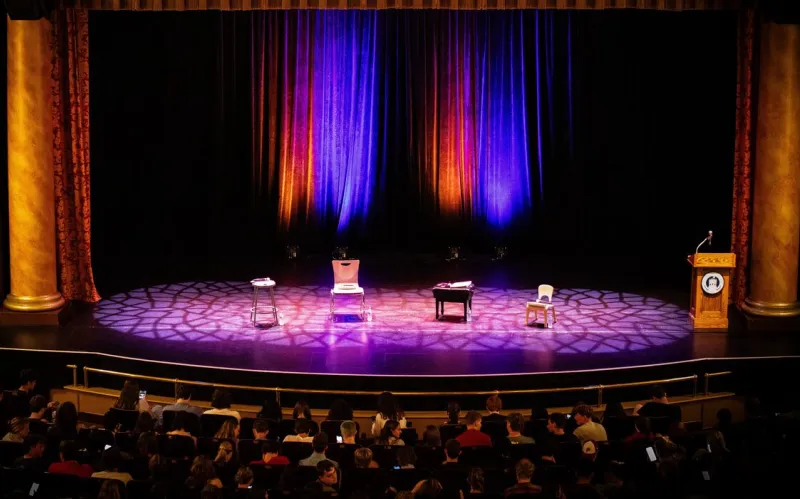
Music performances
Performance is a core component of being a music major. We offer numerous opportunities for all students at Gettysburg College to perform in a wide variety of ensembles.


Ensemble Registration
Registration for Conservatory Ensembles occurs at the first meeting of the ensemble and is coordinated by the ensemble director.
Students are responsible for checking their courses as listed on the student center at the end of the drop/add period and ensuring they are registered correctly. If any errors are found, bring them to the attention of the ensemble director(s) concerned.
Study Abroad and Summer Programs
Students at the Sunderman Conservatory of Music have a rich and diverse range of off-campus study opportunities available to them. Overall, more than 50% of the students at Gettysburg College study off campus - and many of these are attending the Conservatory.
Internships
Conservatory students have the opportunity to experience internships and externships through the Center for Career Engagement.
On-campus internships include: The Esther Kenyon Fortenbaugh Music Internship, a semester-long, paid internship available to Conservatory students with either a major or minor in music.
Conservatory News
The Sunderman Conservatory of Music devotes itself to the development of the art of music in the lives of the campus and broader community by blending excellent, comprehensive musical training with Gettysburg College's strengths as one of the nation's leading liberal arts colleges.
Music-the traditions of classical, jazz, and world musics working side-by-side and crossing boundaries-provides the lens through which students achieve a rich, well-rounded education. The Conservatory offers a wide range of music opportunities for its majors and minors and for those majoring in other fields who are interested in having music as an important part of their lives. It is our belief that the whole person can be fostered through the transforming and transcendent power of music.
A program of rigorous study in specialized music disciplines, coupled with a core curriculum in music theory, history, and literature, not only prepares music majors for distinction as performers, scholars, and teachers but also inspires success in a broad array of potential career choices.
Major and Minor Information
Twelve Units are required for the Bachelor of Arts in Music.
Eight Core Courses
- MUS_CLAS 141 Theory I (grade of C must be earned)
- MUS_CLAS 142 Theory II (grade of C must be earned)
- MUS_CLAS 210 Musicology I
- MUS_CLAS 211 Musicology II
- MUS_CLAS 212 Intro to Ethnomusicology
- MUS_CLAS 241 Theory III (grade of C must be earned)
- MUS_CLAS 242 Theory IV
- MUS_CLAS 442 Topics Seminar
Elective Course
- Choose one 300-level course from the following: MUS_CLAS 304, 318, 341, 342, or other course with Conservatory approval.
Music Ensemble
- Major ensemble on the student’s principal instrument/ voice all semester in residence.
- Usually amounts to 2 units of credit.
Studio Lessons
- Minimum of 6 semesters (1.5 units) of applied study at the 200-level on the student’s principal instrument/ voice.
- Concurrent registration in applied study required during semester of senior capstone.
Senior Capstone
- MUSIC 456
36 units of credit are required for the Bachelor of Music Degree
Eight Applied Studies Courses
- These courses include a weekly studio class and, during the junior and senior years, preparation and performance of the junior and senior recitals.
- MUSIC 157
- MUSIC 158
- MUSIC 257
- MUSIC 258
- MUSIC 357
- MUSIC 358
- MUSIC 457
- MUSIC 458
Large and Chamber Ensembles
- Participation in a Large ensemble during each semester in residence.
- Two semesters of a Chamber Ensemble MUS_ENS 191
Piano Skills
- MUS_CLAS 120
- MUS_CLAS 121
Five Courses in Music Theory
- MUS_CLAS 141 (grade of C must be earned)
- MUS_CLAS 142 (grade of C must be earned)
- MUS_CLAS 241 (grade of C must be earned)
- MUS_CLAS 242
- One course from MUS_CLAS 304, 341, or 342
Four Courses in Music History
- MUS_CLAS 210
- MUS_CLAS 211
- MUS_CLAS 212
- MUS_CLAS 442
Conducting
- MUS_CLAS 205
Performance Studies
- MUS_CLAS 332
- MUS_CLAS 334
Four semesters of Accompanying
- Four Elective Courses
36 units of credit are required for the Bachelor of Music Degree
Eight Applied Studies Courses
- These courses include a weekly studio class and, during the junior and senior years, preparation and performance of the junior and senior recitals.
- MUSIC 157
- MUSIC 158
- MUSIC 257
- MUSIC 258
- MUSIC 357
- MUSIC 358
- MUSIC 457
- MUSIC 458
Large and Chamber Ensembles
- Participation in a Large ensemble during each semester in residence.
- Seven semesters of a Chamber Ensemble
Piano Skills
- MUS_CLAS 120
- MUS_CLAS 121
Five Courses in Music Theory
- MUS_CLAS 141 (grade of C must be earned)
- MUS_CLAS 142 (grade of C must be earned)
- MUS_CLAS 241 (grade of C must be earned)
- MUS_CLAS 242
- One course from MUS_CLAS 304, 341, or 342
Four Courses in Music History
- MUS_CLAS 210
- MUS_CLAS 211
- MUS_CLAS 212
- MUS_CLAS 442
Conducting
- MUS_CLAS 205
Performance Studies
- MUS_CLAS 332
- MUS_CLAS 334
Three and a Half Elective Courses
36 units of credit are required for the Bachelor of Music Degree
Eight Applied Studies Courses
- These courses include a weekly studio class and, during the junior and senior years, preparation and performance of the junior and senior recitals.
- MUSIC 157
- MUSIC 158
- MUSIC 257
- MUSIC 258
- MUSIC 357
- MUSIC 358
- MUSIC 457
- MUSIC 458
Large and Chamber Ensembles
- Participation in a Large ensemble during each semester in residence.
- One semester of a Chamber Music MUS_ENS 191
- Two semesters of Opera Workshop MUS_CLAS 250
Piano Skills
- MUS_CLAS 120
- MUS_CLAS 121
Five Courses in Music Theory
- MUS_CLAS 141 (grade of C must be earned)
- MUS_CLAS 142 (grade of C must be earned)
- MUS_CLAS 241 (grade of C must be earned)
- MUS_CLAS 242
- One course from MUS_CLAS 304, 341, or 342
Four Courses in Music History
- MUS_CLAS 210
- MUS_CLAS 211
- MUS_CLAS 212
- MUS_CLAS 442
Conducting
- MUS_CLAS 205
Performance Studies
- MUS_CLAS 207
- MUS_CLAS 208
- MUS_CLAS 213
- MUS_CLAS 214
- MUS_CLAS 334
Languages
- Voice students must also take one year minimum studying each of two approved languages, which are Italian, French, German, and Spanish.
One Elective Course
36 units of credit are required for the Bachelor of Music Degree
Eight Applied Studies Courses
- These courses include a weekly studio class and, during the junior and senior years, preparation and performance of the junior and senior recitals.
- MUSIC 157
- MUSIC 158
- MUSIC 257
- MUSIC 258
- MUSIC 357
- MUSIC 358
- MUSIC 457
- MUSIC 458
Large and Chamber Ensembles
- Participation in a Large ensemble during each semester in residence.
- Seven semesters of Chamber Music MUS_ENS 191
Piano Skills
- MUS_CLAS 120
- MUS_CLAS 121
Five Courses in Music Theory
- MUS_CLAS 141 (grade of C must be earned)
- MUS_CLAS 142 (grade of C must be earned)
- MUS_CLAS 241 (grade of C must be earned)
- MUS_CLAS 242
- One course from MUS_CLAS 304, 341, or 342
Four Courses in Music History
- MUS_CLAS 210
- MUS_CLAS 211
- MUS_CLAS 212
- MUS_CLAS 442
Conducting
- MUS_CLAS 205
Performance Studies
- MUS_CLAS 332
- MUS_CLAS 334
Three and a Half Elective Courses
Thirty-Six Units are required for Bachelor of Music Education Degree.
Five Courses in Music Theory
- MUS_CLAS 141 (grade of C must be earned)
- MUS_CLAS 142 (grade of C must be earned)
- MUS_CLAS 241 (grade of C must be earned)
- MUS_CLAS 242
- MUS_CLAS 341
Three Courses in Musicology
- MUS_CLAS 210
- MUS_CLAS 211
- MUS_CLAS 212
Conducting
- MUS_CLAS 205
Six Courses in Music Education
- MUS_CLAS 320
- MUS_CLAS 321
- MUS_CLAS 410
- MUS_CLAS 412
- MUS_CLAS 440
- MUS_CLAS 476
Seven courses in Piano/ Voice/ Instrument Techniques
- MUS_CLAS 120
- MUS_CLAS 121
- MUS_CLAS 150
- MUS_CLAS 152
- MUS_CLAS 154
- MUS_CLAS 156
- MUS_CLAS 159
Four Education Courses
- MUS_CLAS 149 for students in the class of 2028 and before, MUS_CLAS 249 for students in the class of 2029 and after
- EDUC 201
- EDUC 320
- EDUC 340
Applied Studies and Ensembles
- Seven semesters of applied study at the 200-level on the student’s principal instrument/ voice at the 200-level.
- Seven semesters of major ensemble on the student’s principal instrument/ voice
- Two semesters of Chamber Music MUS_ENS 191
- One semester of large ensemble outside the primary performance area.
Additional Requirements
- Successful completion of a piano proficiency exam.
- Acceptance into music teacher education in the Spring of the sophomore year.
- Acceptance into teacher education in the Fall of junior year.
- All State education requirements for licensure.
Six units of credit are required for the Music minor.
Two Courses in Music Theory
- MUS_CLAS 141 Theory I (grade of C must be earned)
- MUS_CLAS 142 Theory II (grade of C must be earned)
Two Courses in Musicology
- MUS_CLAS 210 Musicology I
- MUS_CLAS 212 Intro to Ethnomusicology
Music Ensemble
- Minimum of four semesters of major participation ensemble on the student’s principal instrument/ voice
- Wagnild scholarship recipients must participate in an ensemble during all during all semesters of residence.
Studio Lessons
- Minimum of 4 semesters of applied lessons at the 100-level on the student’s principal instrument/ voice, culminating in a jury in the fourth semester of applied study.
- Wagnild scholarship recipients required to complete a minimum of 4 semesters of applied lesson at the 200-level and follow guideline for music majors with regard to applied study, including performance of a jury each semester of enrollment.
First Year Advising and Registration recommendations
The Sunderman Conservatory welcomes students from all majors. If you are not planning to major or minor in music, see the "All Students" section below for ensemble and lesson opportunities.
Audition required: An audition is required for admission as a music major or minor. If you have not yet auditioned, contact Dr. Amanda Heim, Coordinator for Recruitment and Outreach, for information on auditioning in August.
For music majors and minors: before you register
- The Conservatory offers three degree programs: Bachelor of Arts in Music, Bachelor of Music, and Bachelor of Music Education, plus a music minor. Registration is highly individualized, so please review the following information carefully.
- First-year advising information is found entirely on the New Student Orientation section of the Conservatory website. All incoming music majors and minors must consult this section of our website before registering.
- Do not pre-register for applied (private) lessons. Lesson registration takes place at your first meeting with your studio teacher in the fall. Applied Lessons are available in the following areas: Voice, Piano, Organ, Guitar, Woodwinds, Brass, Percussion, and Strings.
- Do not pre-register for ensembles. Ensemble auditions are held at the start of fall semester; the Conservatory Office will submit your registration after ensemble auditions are complete and rosters are finalized.
- Applied lessons and ensembles are each 0.25 credits and do not count toward or against your full-time course load, with one exception: Bachelor of Music students should pre-register for only three courses, as applied lessons count as their fourth course.
- Music majors and minors have specific ensemble requirements. Review them on the Conservatory website under Current Students > Music Performance > Ensemble Participation Requirements.
For all students: ensembles and lessons
- All Conservatory ensembles (choirs, orchestra, wind bands, marching band, jazz ensemble, and more) are open to students of any major. Auditions are held at the start of the fall semester.
- Applied (private) lessons are also available to non-music majors on a space-available basis. There is a fee of $275 per semester. Contact the Conservatory Office for details.
- Participating in the same ensemble or private lessons for four semesters fulfills the Multiple Inquiries-Arts curriculum requirement.
Available Courses
100 Level
Symphony Band is a large concert ensemble performing a wide range of traditional wind literature and new works for band. The ensemble meets during the spring semester and is open to any interested Gettysburg College student who plays a wind or percussion instrument. Faculty, staff, and community members are welcome to participate. There are no auditions; seating will be determined at the first rehearsal. Two hours of rehearsal weekly. Graded A-F. Offered each spring. 0.25 course credit. Four semesters of participation earn MI: Arts credit.
Students will continue to develop performance, transposition, harmonization, and improvisation skills and technique for piano first introduced in MUS_CLAS 120. Students will develop and implement teaching and performance practices commonly employed in their discipline. BME students: Includes required field experience hours with area music teachers; prerequisites are state and
federal clearances for working with children and a grade of C or higher in MUS_CLAS 120 or permission of instructor. BM Students: Includes teaching observations on campus; perquisites are minimum grade of C or higher in MUS_CLAS 120 or permission of instructor.
Hailed as the TIMES magazine 2023 Person of the Year, Taylor Swift has been at the forefront of pop culture for years. While her name itself brings both appeal and aversions, what really shines through the star is her songwriting. This course will spend time on each one of her ten albums diving into the facets of her music, lyrics, the phenomena of the “Swifties” and the impact of Taylor Swift all over the world. Considering a broad range of topics, including femininity and gender; the use of social media and public opinion; politics and social impact; lyricism, fiction and non-fiction; American nationalism and whiteness, family and feuds. Ultimately, we will look at how the evolution of Swift’s songwriting and what that says about her own personal growth.
A comprehensive introduction to the structural principles and compositional techniques of diatonic music which includes the basic elements of theory: pitch, rhythm, notation, intervals, triads and inversion, seventh chords, tonal and modal scales, harmonic progression, and basic voice-leading principles. Correlated sight-singing using solfege, aural perception skills, and keyboard playing. Prerequisite: Ability to read musical notation and knowledge of scales and key signatures, acceptance into the music major or minor programs and/or permission of instructor. Offered each fall.
The course builds upon principals from MUS_CLAS 141 to develop a harmonic vocabulary through analysis, use of seventh chords, secondary functions, and simple modulation. Correlated sight-singing using solfege, aural perception skills, and keyboard harmony. Prerequisite: MUS_CLAS 141 with a grade of C or better. Offered each spring.
Instruction and practice in the technique of playing and approaches to teaching woodwind instruments. Includes required field experience hours with area music teachers. Prerequisite: state and federal clearances for working with children and declared major in music education or permission of instructor. 0.25 course credit. Offered spring of odd-numbered years.
Instruction and practice in the technique of playing and approaches to teaching brass instruments. Includes required field experience hours with area music teachers. Prerequisite: state and federal clearances for working with children and declared major in music education or permission of instructor. 0.25 course credit. Offered spring of even-numbered years.
Instruction and practice in the technique of playing and approaches to teaching string instruments. Includes required field experience hours with area music teachers. Prerequisite: state and federal clearances for working with children and declared major in music education or permission of instructor. 0.25 course credit. Offered each fall.
Instruction and practice in the technique of playing and approaches to teaching percussion instruments. Includes required field experience hours with area music teachers. Prerequisite: state and federal clearances for working with children and declared major in music education or permission of instructor. 0.25 course credit. Offered fall of even-numbered years.
Instruction and practice in solo and ensemble vocal music performance and teaching. Includes required field experience hours with area music teachers. Prerequisite: state and federal clearances for working with children and declared major in music education or permission of instructor. 0.25 course credit. Offered fall of odd-numbered years.
Survey of technological, sociological, and artistic issues related to games and game music. Students will critically examine notions of play; explore the evolution of video game soundtracks; analyze how music operates in games; explore and critique "music games" such as Guitar Hero; and explore music and sound in game-related cultural phenomena (such as video game soundtrack concerts and tribute bands). The course includes a substantial multimedia component. Offered occasionally.
The premier wind band in the Sunderman Conservatory designed for the development of the professional performer, music educators, and dedicated musicians. A select group of 40-50 players, the ensemble rehearses and performs a combination of wind band masterworks and new repertoire. The Wind Symphony is open to all Gettysburg College students. Prerequisite: audition/permission of instructor. Four hours of rehearsal weekly. Graded A-F. Offered fall and spring. 0.25 course credit. Four semesters of participation earn MI: Arts credit.
The Bullets Marching Band performs at all home football games and various other functions throughout the fall semester. Participation is open to any Gettysburg College student who plays a wind or percussion instrument, as well as to visual performers in Color Guard (Flag/Rifle/Saber). Four hours of rehearsal weekly. Graded A-F. Offered each fall. 0.25 course credit. Four semesters of participation earn MI: Arts credit.
Private instruction in the development of the necessary techniques for facility in reading and interpreting a musical score at the keyboard, with emphasis on tone production, physical comfort, efficient practice, ease of performance, and musical style. Literature includes representative compositions of various styles and periods. Weekly half-hour applied lesson and studio class; juried performance in 4th semester of enrollment. Repeated every semester. Open to music minors, non-music majors, and music majors studying secondary performance areas. Prerequisite: Permission of instructor. 0.25 course credit. Four semesters of repeated enrollment satisfy MI: Arts requirement.
The orchestra is dedicated to performing a wide variety of works of orchestral music ranging from the Baroque period through the present. The Orchestra is open to all Gettysburg College Students. Prerequisite: audition/permission of instructor. Four hours of rehearsal weekly. Graded A-F. Offered fall and spring. 0.25 course credit. Four semesters of participation earn MI: Arts credit.
A traditional jazz ensemble of 18-22 musicians dedicated to preserving and advancing America's indigenous musical art form. All styles of jazz are studied from big band swing through contemporary fusion. Campus, community, and festival performances. The jazz ensemble is open to all Gettysburg College students. Prerequisite: audition/permission of instructor. Two hours of rehearsal weekly. Graded A-F. Offered fall and spring. 0.25 course credit. Four semesters of participation earn MI: Arts credit.
Mixed (SATB) choral ensemble for experienced singers. This choir of 40-50 singers performs choral literature from all periods of music history. Performances on campus and in the region, with periodic national or international tours. Open to all Gettysburg College students. Prerequisite: audition/permission of instructor. Four hours of rehearsal weekly. Graded A-F. Offered fall and spring. 0.25 course credit. Four semesters of participation earn MI: Arts credit.
Mixed choral ensemble of 70-90 singers that performs sacred and secular music for large choirs. Open to all Gettysburg College students. Faculty, staff, and community members are welcome to participate. Prerequisite: audition/ permission of instructor. Two hours of rehearsal weekly. Graded A-F. Offered fall and spring. 0.25 course credit. Four semesters of participation earn MI: Arts credit.
Advanced ensemble that performs music for treble voices from various periods and styles. Ensemble performs in major choral concerts each semester and in other campus or community performances. Open to all Gettysburg College students. Prerequisite: audition/permission of instructor. Two hours of rehearsal weekly. Graded A-F. Offered fall and spring. 0.25 course credit. Four semesters of participation earn MI: Arts credit.
Chamber ensembles perform a wide variety of music representing all historical periods. Emphasis is on "one-to-a-part" performance without conductor. Size of the groups will typically range from trios to sextets. Examples of ensembles may include: brass quintet, flute ensemble, piano trio, woodwind quintet, saxophone quartet, string quartet, vocal quartet, chamber opera, and other/mixed ensembles. Instrumental/vocal combinations vary depending upon student availability and demand. Prerequisite: permission of instructor. Graded A-F. Offered fall and spring. 0.25 course credit.
All string chamber ensembles are known as Sunderman Strings. The size of individual groups can cover the gamut from duos to un-conducted chamber orchestra. Combinations may vary from year to year. Graded A-F. Offered fall and spring. 0.25 course credit.
Performs a wide variety of percussion ensemble literature drawn from many eras and styles. Open to all percussionists, including music majors, music minors, and all Gettysburg College students. Musicians whose primary performance area is not percussion may be admitted with permission of instructor. Two hours of rehearsal each week. Graded A-F. Offered each spring. 0.25 course credit.
Focuses on small group jazz improvisation. Repertoire covers the gamut of musical types found in contemporary jazz, stressing the bebop language and the popular song form but also modal, Latin, and free approaches. The group performs both on and off campus. Two hours of rehearsal each week. Graded A-F. Offered fall and spring. 0.25 course credit.
Advanced vocal chamber ensemble performing music written for small ensembles, from madrigals to vocal jazz. Ensemble performs in choral concerts and in other campus or community performances. Prerequisite: audition/permission of instructor and concurrent enrollment in a choral ensemble (MUS_ENS 181, 182, or 183). Two hours of rehearsal each week. Graded A-F. Offered fall and spring. 0.25 course credit.
The Afro-Latin Percussion Group is open to all Gettysburg College students, regardless of major. This course is designed to for beginners as well as for experienced drummers. Students will explore a number of different cultures, learning traditional rhythms from Cuba, Puerto Rico, Brazil, Peru and West Africa. While course emphasis is on the enjoyment of music and on learning, students will also perform publicly. Graded A-F. Offered each fall. 0.25 course credit.
Gamelan Gita Semara is an instrumental ensemble from Bali, Indonesia consisting of metallic barred instruments, gongs, bronze pots, drums, cymbals, and flutes. The ensemble is open to any interested Gettysburg College student, regardless of major. The course is designed for beginning as well as experienced musicians. Music is learned without notation and taught through an aural transmission process. Each semester, the ensemble performs programs of traditional and contemporary Balinese music on campus and at venues throughout the region. Faculty, staff, and community members are welcome to participate. There are no auditions. Two hours of rehearsal weekly. Graded A-F. Offered each semester. 0.25 course credit.
This course teaches fundamental materials of music through the creative experiences of music reading, functional keyboard skills, aural analysis, and singing. Introduction to the basics of music theory. Prerequisite: the ability to read in treble or bass clef and to match pitch vocally. Offered as needed.
Private instruction in singing technique, with emphasis on breath support, resonance, tone quality, diction and interpretation. Study includes song literature in various styles and languages. Weekly half-hour applied lesson and studio class; juried performance in 4th semester of enrollment. Repeated every semester. Open to music minors, non-music majors, and music majors studying secondary performance areas. Prerequisite: Permission of instructor. 0.25 course credit. Four semesters of repeated enrollment satisfy MI: Arts requirement.
Private instruction designed to include literature of various periods. Weekly half-hour applied lesson; juried performance in 4th semester of enrollment. Repeated every semester. Open to music minors, non-music majors, and music majors studying secondary performance areas. Prerequisite: Satisfactory piano skills and permission of instructor. 0.25 course credit. Four semesters of repeated enrollment satisfy MI: Arts requirement.
Private or small group instruction emphasizing fundamentals of jazz improvisation including the study of modes, scales, the blues, and standard progressions used by jazz musicians. Literature study of a variety of jazz styles periods and transcribing solos by seminal jazz musicians are also an integral part of the class. Weekly half-hour applied lesson. Repeated every semester. Open to non-music majors and music majors/minors studying secondary performance areas. Prerequisite: Permission of instructor. 0.25 credit.
Private instruction emphasizing skills of technique, interpretation, reading, and fretboard knowledge. Classical and other styles are offered according to needs of students. Weekly half-hour applied lesson; juried performance in 4th semester of enrollment. Repeated every semester. Open to music minors, non-music majors, and music majors studying secondary performance areas. Prerequisite: Permission of instructor. 0.25 course credit. Four semesters of repeated enrollment satisfy MI: Arts requirement.
Applied instruction in composition focusing on technique, meaning, and creativity. Students compose original works in a variety of mediums (such as orchestral, chamber music, choral, electroacoustic, etc.) and analyze a broad repertoire of compositions. Issues pertaining to music theory, ear training, conducting, orchestration, instrumentation, improvisation, and career may be covered. Weekly studio class. Repeated every semester. Prerequisite: Permission of instructor. 0.25 course credit.
The first of an eight-semester course sequence of music performance instruction for students in the Bachelor of Music degree in Performance. Weekly one-hour applied lesson and studio class; culminates in juried performance. Prerequisite: audition and acceptance to the Bachelor of Music in Performance degree. Offered each fall.
The second of an eight-semester course sequence of music performance instruction for students in the Bachelor of Music degree in Performance. Weekly one-hour applied lesson and studio class; culminates in juried performance. Prerequisite: MUSIC 157; audition and acceptance to the Bachelor of Music in Performance degree. Offered each spring.
This course is the first of a two-course sequence. Students will begin to gain skills in piano performance, piano technique, reading from the grand staff, transposition, harmonization, improvisation, and performing accompaniments for typical songs used in the public and private school music curriculums. This course is required for both BME and BM students to fulfill the piano proficiency requirements for each program.
An exploration of American globalization through the lens of music and dance. This course focuses on music and dance traditions at their center of origin, but also their diffusion and change over time. Students discover cultural contexts in which these traditions function, using music and dance as lenses on various societies, events, and individual creators. Studying American music as a process, in tandem with its dance, reflects recent conceptual shifts in ethnomusicology. Offered occasionally.
Study of music from a variety of Western and non-Western genres from the beginning of the twentieth century to the present. Emphasis is placed on the development of perceptive listening skills and the analysis of cultural context. Offered occasionally. Specific topics on contemporary music may vary.
Students will embark on a journey through the rich tapestry of global music traditions. This course ensures that students understand music’s global significance by immersing them in a diverse repertoire from around the world. Through a comprehensive three-part model for listening—sound, setting, and significance—students develop the essential skills to analyze and appreciate various musical styles within their cultural contexts.
The course emphasizes the interconnectedness of music and culture, encouraging students to explore the socio-historical factors that shape musical expressions. From traditional folk melodies to contemporary fusion genres, students examine how music reflects and influences society, identity, and human experience.
This course for the general student population considers the vocabulary of music and presents a variety of important musical forms and genres of western music in relation to the cultural contexts in which they are found. Through a study of landmark works in classical and/or popular music, students develop and apply listening techniques that sharpen critical perception and enjoyment of music. Topics may vary by semester. Requires attendance at several live concerts. Offered each semester. Fulfills MI Arts.
Study of America's indigenous musical art form from early blues and Dixieland through current trends. Concert attendance and listening assignments are required to attain an understanding of the genesis and development of jazz.
200 Level
This course presents a historical survey of Western art music from the Medieval through Modern Romantic eras. Students engage with representative and canonic texts of art music (through both listening and score-study) as well as discuss the various contexts for these texts: the composers who wrote them, the performers who performed them, the patrons who supported them, and the audiences and critics who wrote about them. In addition, students explore the relationship between these texts and the world beyond music, looking at contemporary developments in art, literature, drama, philosophy, religion, and politics. Prerequisite: declared music major or minor, or permission of the instructor. Offered each spring.
Development of basic conducting technique. Areas of study include conducting gestures, baton skills, score reading, basic rehearsal techniques, introductory score analysis and interpretation. Prerequisite: MUS_CLAS 142. Offered each spring.
A detailed study of the International Phonetic Alphabet, with particular attention to the principles and symbols of Italian and German diction. Application of principles through written assignments, oral drill, lab work, and individual performance in class. Normally offered in the fall of odd-numbered years. 0.50 course credit.
Private instruction in singing technique, with emphasis on breath support, resonance, tone quality, diction and interpretation. Study includes song literature in various styles and languages. Weekly one-hour applied lesson and studio class; culminates in juried performance. Repeated every semester. Open to B.A. and B.M.E. students majoring in music or music education, as well as music minors on Wagnild Scholarships. Prerequisite: Audition and declared music major or Wagnild Scholarship. 0.25 course credit. Four semesters of repeated enrollment satisfy MI: Arts requirement.
Private instruction in the development of the necessary techniques for facility in reading and interpreting a musical score at the keyboard, with emphasis on tone production, physical comfort, efficient practice, ease of performance, and musical style. Literature includes representative compositions of various styles and periods. Weekly one-hour applied lesson and studio class; culminates in juried performance. Repeated every semester. Open to B.A. and B.M.E. students majoring in music or music education, as well as music minors on Wagnild Scholarships. Prerequisite: Audition and declared music major or Wagnild Scholarship. 0.25 course credit. Four semesters of repeated enrollment satisfy MI: Arts requirement.
Private instruction designed to include representative literature of various periods. Weekly one-hour applied lesson; culminates in juried performance. Repeated every semester. Open to B.A. and B.M.E. students majoring in music or music education, as well as music minors on Wagnild Scholarships. Prerequisite: Audition and declared music major or Wagnild Scholarship. 0.25 course credit. Four semesters of repeated enrollment satisfy MI: Arts requirement.
Private instruction emphasizing fundamentals and representative repertoire for the performance of the guitar. Repeated every semester. Weekly one-hour applied lesson; culminates in juried performance. Repeated every semester. Open to B.A. and B.M.E. students majoring in music or music education, as well as music minors on Wagnild Scholarships. Prerequisite: Audition and declared music major or Wagnild Scholarship. 0.25 course credit. Four semesters of repeated enrollment satisfy MI: Arts requirement.
The third of an eight-semester course sequence of music performance instruction for students in the Bachelor of Music degree in Performance. Weekly one-hour applied lesson and studio class; culminates in juried performance. Prerequisite: MUSIC 158; audition and acceptance to the Bachelor of Music in Performance degree. Offered each fall.
The fourth of an eight-semester course sequence of music performance instruction for students in the Bachelor of Music degree in Performance. Weekly one-hour applied lesson and studio class; culminates in sophomore assessment and interview. Prerequisite: MUSIC 257; audition and acceptance to the Bachelor of Music in Performance degree. Offered each spring.
This course teaches music technology skills aimed at 21st century musicians, including introductory acoustics and critical listening, live sound reinforcement, basic and intermediate audio and video recording and editing, creation of an online professional portfolio, and use of social media in developing your personal brand identity as a musician. Students will examine societal issues of music distribution and ownership, including those of copyright, sampling, and plagiarism. Course
includes classroom and lab components. Enrolled students should possess technical fluency on an instrument/voice, be comfortable performing alone and with others, and have basic theoretical knowledge of music. Offered occasionally.
This course explores the rigorous study of the relationships between sound and culture in different contexts. It assumes a cultural perspective toward music making to understand the social dimensions of music creation, practice, and dissemination. The course uses methods such as sound embodiment and critical analysis as well as theoretical frameworks from various disciplines such as linguistics, anthropology, acoustics, psychology, and sociology. Previous topics in this class include "Music from the Caribbean" and "Latinx Musics." MUS 251, AFS 251, and LAS 251 are often cross-listed in various combinations depending on the topics offered.
Intensive performance-based course providing students with an appropriate educational environment for the preparation and performance of scenes from operas, operettas, and/or musical theatre from the standard repertoire. Emphasis is on musical preparation, vocal coaching, diction, acting techniques, written in-depth character analysis, and stage movement, culminating in a public performance. Open to all students by audition or consent of instructor. Offered each spring. May be taken two times for credit.
Orientation to the practice of teaching and learning music. Students are provided both theoretical and practical experience in understanding the social, cultural, and historical development and implementation of various models used in teaching and learning music in the U.S. and across the globe. Students will learn to develop optimum environments for learning that address the needs of diverse populations and evaluate the effectiveness of instruction. Includes required field experience hours with area music teachers. Open to all music majors. Prerequisites for music education majors: state and federal clearances for working with children. Offered each fall.
A survey of the history of African American music in the United States, beginning with a perusal of music in Africa and the Caribbean and tracing its development from spirituals to hip-hop. Disciplinary perspectives range from ethnomusicology (the study of music in its cultural context) to anthropology, religious studies, critical race theory and gender studies. No previous academic experience with music is required. Cross-listed with AFS 247.
Jazz is appropriately considered to be African American classical music because 1) its major innovators are black; 2) it is acknowledged as a uniquely American art form, and, 3) like European and Asian classical musics, it stresses virtuosity, is performed by professionals, and (nowadays) is meant primarily for listening. This course surveys the development of jazz in relation to African American history and aesthetics, addressing socio-political contexts as well as musical style. AFS 244 and MUS_CLAS 244 are cross-listed.
Theoretical study of compositional techniques and musical vocabularies of the late 19th century to the present, including extension of tonality, developments in rhythm, atonality and serialism, set theory, notational innovations, and assumptions and practices of the avant-garde. Analysis of larger forms, a 20th-21st-century research component, and composition projects. Correlated increasingly advanced skills in sight-singing and aural perception. Prerequisite: MUS_CLAS 241 with a grade of C or better. Offered each spring.
Building on skills gained in MUS_CLAS 141 and 142, students explore musical structure through small forms and composition projects. Other topics include advanced modulation techniques, and chromatic harmony. Correlated skills in sight-singing, aural perception, and keyboard harmony include singing chromatic melodies and melodies that modulate and notating and playing progressively more complex melodic, rhythmic, and harmonic idioms. Prerequisite: MUS_CLAS 142 with a grade of C or better. Offered each fall.
An intensive two-week experience in performance and analysis off-campus as part of a summer music festival. Students rigorously study the elements of analysis, coherent interpretation, and performance of musical compositions. Particular emphasis is placed on solo and chamber music repertoire with opportunities to perform in concerts and master classes with international musicians. Prerequisite: permission of the instructor. Offered occasionally.
Survey of solo vocal literature from the 17th to the 21st century focusing on works in German and French through the context of history, culture, and musical tradition with emphasis on evolving poetic and harmonic styles. The course highlights the significant features and development of the art song and provides approaches and resources for studying this literature. Works of oratorio and chamber music, as well as art songs in Russian, Spanish, Czech, Slavic and Scandinavian languages may be included as special projects. The course requires extensive listening assignments and in-class performances. Normally offered in the spring of odd-numbered years. 0.50 course credit.
Survey of solo vocal literature from the 17th to the 21st century focusing on works in English and Italian through the context of history, culture, and musical tradition with emphasis on evolving poetic and harmonic styles. The course highlights the significant features and development of the art song and provides approaches and resources for studying this literature. Works of oratorio and chamber music, as well as art songs in Russian, Spanish, Czech, Slavic and Scandinavian languages may be included as special projects. The course requires extensive listening assignments and in-class performances. Normally offered in the fall of even-numbered years. 0.50 course credit.
This course is an introduction to ethnomusicology, the study of music in its cultural context. Students develop skills to think and write about music from cross-cultural perspectives, and world music repertoires from Africa, Asia, and the Americas are covered. Emphasis is placed on roles that music has played in struggles for social justice. Prerequisite: MUS_CLAS 210, MUS_CLAS 211, or permission of instructor. Fulfills Multiple Inquiries—Arts and Conceptual Diversity—Global Understanding. Offered each spring.
In this seminar-style course students will think, write, and listen critically to Western art music, American vernacular music, and jazz, exploring a broad array of genres, topics, and issues. Students engage both representative and neglected texts of music through study of scores and performances, historical primary sources, and scholarly secondary sources. Students will explore in more depth the relationship between these various types of texts, the intellectual and historical world beyond music, and broader cultural currents such as race/ethnicity, gender/sexuality, and social class. Prerequisite: MUS_CLAS 210 or permission of the instructor. Fulfills Multiple Inquiries—Humanities. Offered each fall.
A detailed study of the International Phonetic Alphabet, with particular attention to the principles and symbols of English and French diction. Application of principles through written assignments, oral drill, lab work, and individual performance in class. Normally offered in the spring of even-numbered years. 0.50 course credit.
300 Level
The sixth of an eight-semester course sequence of music performance instruction for students in the Bachelor of Music degree in Performance. Weekly one-hour applied lesson and studio class; culminates in juried performance or a half recital to be given in either the fall or spring of the junior year as a component of this curriculum. Prerequisite: MUSIC 357; audition and acceptance to the Bachelor of Music in Performance degree. Offered each spring.
The fifth of an eight-semester course sequence of music performance instruction for students in the Bachelor of Music degree in Performance. Weekly one-hour applied lesson and studio class; culminates in juried performance or a half recital to be given in either the fall or spring of the junior year as a component of this curriculum. Prerequisite: MUSIC 258; audition and acceptance to the Bachelor of Music in Performance degree. Offered each fall.
Study of selected string quartets and string ensemble works with strong emphasis on the application of analysis to performance. The class explores the development of the music's compositional styles against the backdrop of historical and social settings. Particular attention is given to studying the harmonic and melodic language of the composers within the context of their writing for strings with particular emphasis on stylistic comparisons among the works studied and performed during the semester. May be repeated once for credit. Prerequisites: Open to string instrumentalists by permission of instructor. Offered occasionally.
Course designed to give advanced music majors the opportunity to study common forms and procedural types, and other musical processes in depth and to challenge them to grapple with music's complexities using a variety of analytical methodologies. Prerequisites: MUS_CLAS 212 and 242, or permission of instructor. Offered occasionally.
Study of capabilities and limitations of the standard wind, string, and percussion instruments. Included is score study, transcription, transposition, arranging and emphasis on applied orchestration projects for laboratory performance and critique. Prerequisite: MUS_CLAS 242. Normally offered fall of even-numbered years.
A comprehensive survey of learning theories, various pedagogical methods, appropriate literature, and laboratory application for the principal instrument or voice. Students will develop skills for private studio teaching and be introduced to the practical considerations of studio administration. Prerequisite: audition and acceptance to the Bachelor of Music Performance degree or permission of instructor. 0.50 course credit. Offered as needed.
Survey of the musical literature of a particular performance area for students pursuing instrumental tracks in the BM in Performance degree. Students channel their research and study toward their own performance specialty and survey the general body of compositions written for that medium. Prerequisite: audition and acceptance to the Bachelor of Music Performance degree or permission of instructor. 0.50 course credit. Offered as needed.
Study and evaluation of philosophies, approaches, and materials of teaching and learning music with adolescents. Students explore music as a medium for enacting social change. Topics center around diversity, creativity, identity formation, and the use of popular, culturally responsive, and critical pedagogies in music. Creative and collaborative projects include building ukuleles; composing; recording and mastering original songs; writing, performing, filming, and showcasing an original musical; and developing and implementing lessons and curricula for a wide variety of learning contexts outside of large ensemble settings. Includes required field experience with area music teachers. Prerequisites: state and federal clearances for working with children and MUS_CLAS 149. Offered each spring.
Study and evaluation of philosophies, approaches, and materials of teaching and learning music with children from birth to adolescence. Students will explore approaches for guiding children to listen to, respond to, create with, and perform music. Creative and collaborative projects include: writing culturally responsive lessons, unit plans, and curricula for different stages of childhood. Includes required field experience with area music teachers. Prerequisites: state and federal clearances for working with children, declared major in music education and MUS_CLAS 120, 121, 149, and 159. Offered fall of odd-numbered years.
An interdisciplinary perusal of issues surrounding Africana musics ranging from African music such as juju to Afro-Caribbean styles such as salsa and African American forms such as jazz and hip-hop. This discussion-oriented course calls upon perspectives from Africana studies, ethnomusicology (the study of music in its cultural context), anthropology, religious studies, history, philosophy, critical race theory, gender studies, and literary criticism. Cross-listed with AFS 318.
Concentration on advanced conducting skills and technique. Areas of study include more highly developed conducting gestures, advanced interpretive and rehearsal techniques, and a more intensive study of literature and score analysis. Prerequisites: MUS-CLAS 205, MUS-CLAS 242, MUS_CLAS 210, and MUS_CLAS 211 (or permission of instructor). Offered occasionally.
Introduction to contrapuntal techniques of the eighteenth century and species counterpoint. Original composition projects for small ensembles are an integral part of the course. A working knowledge of Sibelius software is helpful. Completion of MUSIC 242 or permission of instructor is required. Prerequisite: MUS_CLAS 242. Offered in the fall of odd-numbered years.
400 Level
The eighth of an eight-semester course sequence of music performance instruction for students in the Bachelor of Music degree in Performance. Weekly one-hour applied lesson and studio class; culminates in juried performance or a full recital to be given in either the fall or spring of the senior year as a component of this curriculum. Prerequisite: MUSIC 457; audition and acceptance to the Bachelor of Music in Performance degree. Offered each spring.
Study of philosophies and approaches of teaching and conducting instrumental groups including orchestra and wind band ensembles. Students learn advanced skills of conducting instrumental ensembles, including score analysis, musical interpretation, rehearsal techniques, and approaches for communicating musical intent through conducting gestures. Other topics include the organization of instrumental ensembles and music programs and a survey of musical literature appropriate for instrumental ensembles of various ages and contexts. Partially fulfills the certification requirement for field experience hours with area music teachers. Prerequisites: state and federal clearances for working with children, declared major in music education, and MUS_CLAS 149, 150, 152, 154, 156, and 205. Offered fall of even-numbered years.
Half credit internship, graded S/U.
Teaching in school settings with varied age groups in cooperation with and under the supervision of experienced teachers. Individual conferences and seminars with the College supervisor and cooperating teacher are required. Students spend at least 15 weeks in the classroom. Prerequisites: state and federal clearances for working with children, declared major in music education, and MUS_CLAS 320, 321, 410, 412. Co-requisite: MUS_CLAS 440. 3 course units. Offered as needed, normally every spring.
Individualized tutorial not counting toward minimum requirements in a major or minor, grades A-F.
Summative capstone of the B.A. music major curriculum which demonstrates mastery over the area of concentration and the communication conventions of the major. Possible formats include a performance or composition recital with a summative component, a recital that combines performance and a second discipline, and a thesis or presentation. Required for all B.A. students majoring in music. Prerequisite: Permission of instructor and music faculty. Co-requisite: registration in applied lessons as appropriate at the 200-level.
Individualized tutorial counting toward the minimum requirements in a major or minor, graded A-F.
Study of philosophies and approaches of teaching and conducting choral ensembles. Students learn advanced skills of conducting choral ensembles, including score analysis, musical interpretation, rehearsal techniques, and approaches for communicating musical intent through conducting gestures. Other topics include the organization of choral ensembles and music programs and a survey of musical literature appropriate for choral ensembles of various ages and contexts. Partially fulfills the certification requirement for field experience hours with area music teachers. Prerequisites: state and federal clearances for working with children, declared major in music education, and MUS_CLAS 120, 121, 149, 159, and 205. Offered fall of even-numbered years.
The seventh of an eight-semester course sequence of music performance instruction for students in the Bachelor of Music degree in Performance. Weekly one-hour applied lesson and studio class; culminates in juried performance or a full recital to be given in either the fall or spring of the senior year as a component of this curriculum. Prerequisite: MUSIC 358; audition and acceptance to the Bachelor of Music in Performance degree. Offered each fall.
The seminar, an accompaniment to the semester of music student teaching, explores approaches for teaching culturally and linguistically diverse students in pre-adulthood school music settings. It also addresses informal and formal assessment techniques within an interactive assessment-instruction framework, the processes for implementing assessments, and adapting instruction for students with learning differences. Students will learn how to apply for and interview for jobs and create and present a reflective teaching portfolio and website. Co-requisite: MUS_CLAS 476. Offered as needed, normally every spring.
In-depth study, using musicological, ethnomusicological, and other supporting methodologies, of a unifying musical topic such as the works of a single composer or small group of composers, a study of a particular musical genre, geographical place, or a focused look at an important musical issue. Prerequisites: MUS_CLAS 210, 211, 242, or permission of the instructor.
Individualized tutorial counting toward the minimum requirements in a major or minor, graded A-F.
Individualized tutorial counting toward the minimum requirements in a major or minor, graded S/U.
Summer Internship graded S/U, counts for minimum requirements for a major or minor only with written permission filed in the Registrar's Office.
Individualized tutorial not counting in the minimum requirements in a major or minor, graded S/U.
Individualized research counting toward the minimum requirements in a major or minor, graded A-F.
Individualized research not counting toward minimum requirements in a major or minor, graded A-F.
Individualized research not counting in the minimum requirements in a major or minor graded S/U.
Internship not counting in the minimum requirements in a major or minor, graded A-F.
Internship not counting in the minimum requirements in a major or minor, graded S/U.
Summer internship graded A-F, counts for minimum requirements for a major or minor only with written permission filed in the Registrar's Office.
Sunderman Conservatory of Music
Ready to Do Great Work?
